
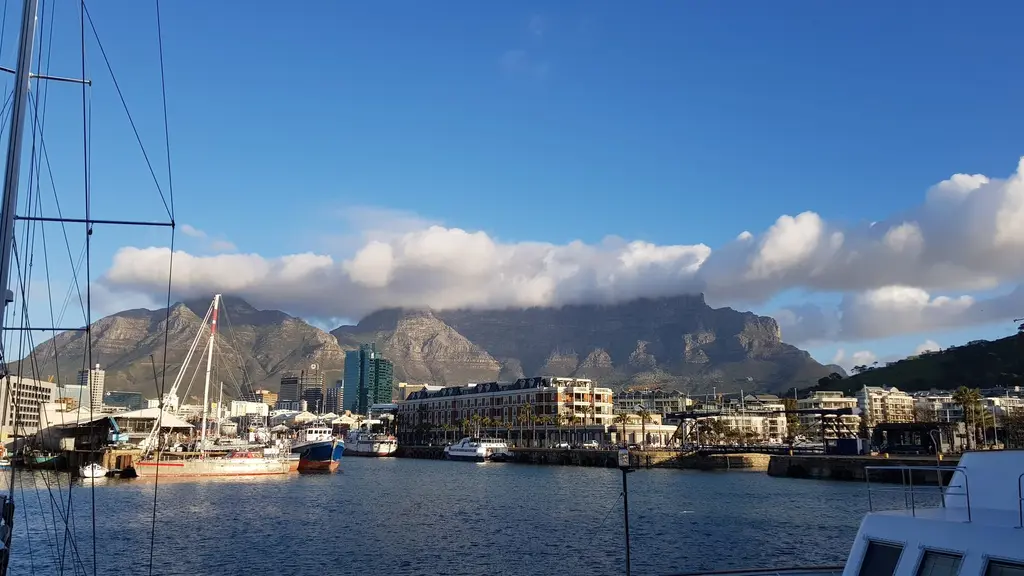
Every year a few thousand couples who have never been here decide to get married in Cape Town, and almost all of them pick the same month. It is the wrong month. We say this with love, and with a great deal of sympathy, because the mistake is completely logical from six thousand miles away.
If you are planning from London or Berlin or Boston, December looks perfect: it is summer here, everyone says so, and it lines up with leave. What the weather averages do not tell you is that December in Cape Town has a personality, and her name is the Cape Doctor.
So here is the local briefing — the one your venue may be too polite to give you, and the one that turns a beautiful gamble into a beautiful certainty.
The wind is the whole story
The south-easter, known locally as the Cape Doctor, blows from roughly the end of August through to March, and it is at its most enthusiastic in November and December. It is not a breeze. It is the wind that takes a marquee sidewall off its pegs, flattens a tall floral installation, lifts a veil horizontally through every ceremony photograph, and makes an outdoor speech through a PA system a genuine test of a marriage.
Which is why local planners quietly steer couples towards March and April. Still warm, considerably calmer, and with the softer, lower autumn light most photographers here will tell you they prefer.
Be clear-eyed about the edges of that window. The south-easter’s season runs into March, so March is past the November peak rather than past the wind altogether — April is the safer of the two. And February, which is the month couples usually offer as their compromise, is still firmly inside the season.
The trade-off is honest: March is also the tail of peak season, so you are not saving money by moving. You are buying calm rather than a discount. Given what a windy ceremony costs you in photographs you cannot retake, we think it is the best-value swap in South African wedding planning.
What each area actually gives you
“Cape Town” on a wedding website can mean five quite different days out. The regions are closer together than a map suggests, but they behave differently:
- The Winelands (Stellenbosch, Franschhoek, Paarl) — mountains, vines and oak avenues, and meaningfully more sheltered from the south-easter than the coast. It is where most of the imported photography you have saved was actually taken. Our Stellenbosch guide goes further into this one.
- Constantia — the Winelands look, twenty-five minutes from the airport and the city hotels. The compromise most international couples land on once they have counted how far guests have to drive.
- The Atlantic seaboard (Camps Bay, Clifton, Llandudno) — the postcard. Also the most exposed to wind, and the most expensive. Sunsets here are unimprovable when it behaves.
- False Bay and the south peninsula (Simon’s Town, Noordhoek) — warmer water, more relaxed, better value, and the side of the mountain that catches the south-easter differently. Worth a look if the Atlantic quotes have alarmed you.
- The West Coast — stark, wide and empty, and a completely different mood. We have a West Coast rundown if the idea appeals.
For a wider view of the region beyond the peninsula, our Cape weddings overview is the place to start.
The things that catch international couples out
- Sunset is late, and later than you think. In December and January the sun sets here at about eight in the evening. A ceremony at four leaves you four hours of daylight to fill before anything feels like an evening. Plan the timeline around the light, not around the template from home.
- Your guests will want a holiday, not a weekend. Nobody flies eleven hours for one Saturday. Assume a week, and assume you are informally the tour operator — a shared list of things to do is worth more than a welcome bag.
- Book accommodation blocks absurdly early for a March or April date. You are competing with the ordinary tourist season, not just with other weddings.
- Distances are deceptive. Franschhoek looks close to the city on a map. Put your guests on that road after dark, after wine, and you will wish you had not. Arrange transport as part of the wedding, not as a suggestion.
- The exchange rate is the quiet reason Cape Town keeps winning these decisions. Couples arriving with pounds, euros or dollars generally find their budget stretches further here than at home — but get real quotes in rand early rather than assuming a fixed discount, since the top end of the Cape market is priced for exactly this audience and is not cheap.
The paperwork, briefly
If either of you is not a South African citizen, there is an administrative layer to clear before the romance: Home Affairs will want documentary proof that you are both free to marry, which for a foreign national usually means a letter or certificate of no impediment from your country of citizenship — obtainable either at home or, in many cases, through that country’s embassy or consulate here — alongside passports and any relevant permit. Requirements and processing times change, and they are not something to take from a wedding blog — confirm the current list directly with the Department of Home Affairs and your own embassy before you book flights, and start it far earlier than feels necessary.
Many international couples simplify this by handling the legal marriage at home and treating the Cape Town day as the ceremony that matters to them. That is an entirely respectable option and it removes the only genuinely stressful part of the plan.
One last thing
Come once before you commit, in the same month as your date, and stand at the venue at the exact hour of your ceremony. Not at ten in the morning when the agent wants to show you around — at five in the afternoon, when the wind gets up and the light does what it will do on your day.
Everyone who does this changes something. Usually the time, occasionally the venue, and now and then just the plan for where the drinks table goes. It is the single most useful trip you will take.
Cape Town wedding questions, answered
What is the best month for a Cape Town wedding? March and April. Still warm, well past the November peak of the south-easter, and with the softer autumn light. April is the calmer of the two, since the wind season runs into March. December and January are the popular choice and the windiest.
When should we avoid entirely? June to August is the Cape winter rainy season. Some couples do it deliberately — fireplaces, small guest lists, low prices — but it is not the outdoor Cape Town wedding you have on your board.
How far ahead should we book? Twelve to eighteen months for a February or March date at a well-known venue, and book guest accommodation at the same time rather than afterwards.
Do we need a local planner if we are marrying from abroad? For a destination wedding here, yes, and the reason is timing rather than taste: someone has to be physically present for tastings, walkthroughs and the week-of decisions. It is also the cheapest insurance available against booking a wind-exposed venue in November.
Pin this before you pick a date. We keep our Cape and Winelands venue boards running all year on Pinterest — follow along if you are planning a South African wedding from somewhere considerably colder.